The history of the screwdriver: From the first screw joints to modern quality standards
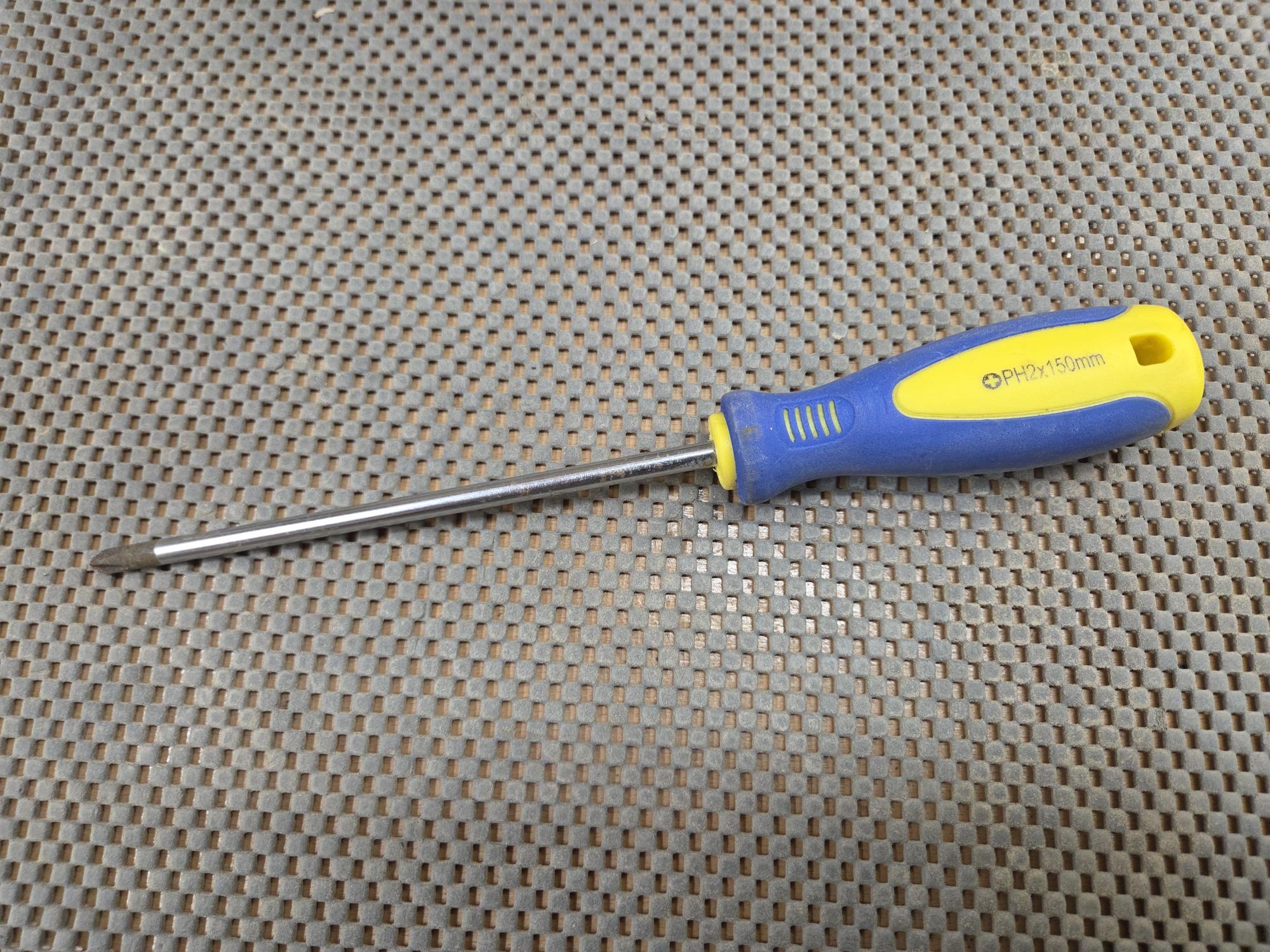
At first glance, the screwdriver is one of the simplest hand tools today: a steel shaft, a shaped tip and a handle that allows the user to transfer force to a screw. However, its modern form is the result of a long process of development involving advances in screw manufacturing, the development of metal materials, industrial requirements and a better understanding of human grip and tool control.
The screwdriver is a good example of how a basic idea can evolve over centuries without losing its original purpose. It is still used to drive screws, but modern tools are expected to do much more than simply turn a screw. They must have the correct tip geometry, withstand mechanical stress, provide a reliable connection between the shaft and handle, and offer comfortable, controlled operation.
The same applies to POPAR hand tools. Over two decades of POPAR tool development, the appearance of the tools has certainly evolved, while their core purpose has remained unchanged: to provide quality hand tools. The POPAR brand is developed under the umbrella of LMM Profesional, a company founded in 2004 that began developing its own brand in 2006.
The screwdriver: From a craftsman's tool to an indispensable hand tool
When was the first screwdriver invented?
The history of the screwdriver is closely linked to the history of the screw. As long as screw joints were uncommon and screws were difficult to manufacture, screwdrivers were not as widely used as they are today.
Among the earliest known depictions of a screwdriver are illustrations in the so called Housebook of Wolfegg, a manuscript dating from approximately 1475 to 1490. Early screwdrivers were designed for slotted screws and had simple handles, often pear-shaped. However, historical sources do not allow us to reliably determine where the screwdriver was invented or who invented it.
The earliest uses of screws have been identified in the manufacture of armour, weapons and various mechanical assemblies. In these applications, the main requirement was that the tool could provide sufficient grip and transfer force to the screw head. The design was simple, but the fundamental principle already applied then and remains relevant today: the tip must match the slot, and the handle must allow the user to turn the screw in a controlled manner. Source: Smithsonian National Museum of American History – collection of historical screwdrivers.
The industrial revolution also changed the role of the screwdriver
A major turning point in screwdriver development was not merely a change in its shape, but also advances in screw and machinery manufacturing.
As industry developed, there was a growing need to produce large quantities of screws that were as uniform as possible in size and shape. Only then could they fit screw joints correctly and be used to assemble different machines and devices. This required more precise machinery and tools capable of producing consistent threads — the helical grooves on a screw that allow it to be driven into a material or nut.
Around 1800, English mechanical engineer Henry Maudslay made an important contribution in this area by developing more precise thread-cutting machinery. As a result of such advances, screws became more uniform and reliable, and their use expanded throughout mechanical engineering and industry. The tools required to drive them, including screwdrivers, developed alongside them. Source: Science Museum Group – Henry Maudslay's thread-cutting tools.
By the first half of the nineteenth century, screwdrivers were also being used in specialised workshops producing precision mechanical instruments. One example is held in the collection of the Smithsonian National Museum of American History: a screwdriver from the workshop of telescope maker Henry Fitz (1808–1863). The tool has a wooden handle and a steel shaft — two basic components still found in many modern screwdrivers.
Although their shapes have changed over time, the fundamental design has remained remarkably similar.
For more information about the tool and the thread-cutting machine, and to view photographs of both items, visit: Smithsonian National Museum of American History – screwdriver from Henry Fitz's workshop.
From a simple design to a systematically engineered tool
As screws became more widely used in manufacturing, maintenance, construction and household tasks, expectations for hand tools increased as well. Users needed screwdrivers in different lengths and widths, with better-fitting tips and handles that enabled more efficient work.
Development gradually encompassed every part of the tool. The tip had to be shaped precisely enough to fit the screw head correctly. The shaft had to withstand loads without unwanted twisting or breaking. The handle had to transmit torque and remain reliable even during repeated use.
Over time, different screw-drive profiles were also developed to meet the requirements of specific applications. Today, hand tools are available for slotted, cross-head, star-shaped and other drive profiles. Since we have already discussed their differences in greater detail in a separate article, we will not examine them individually here. Learn more about the different screw-drive types in our blog post Types of Screw Bits and Screwdrivers – Screw Drive Profiles Explained.
From a POPAR screwdriver 20 years ago to today's model
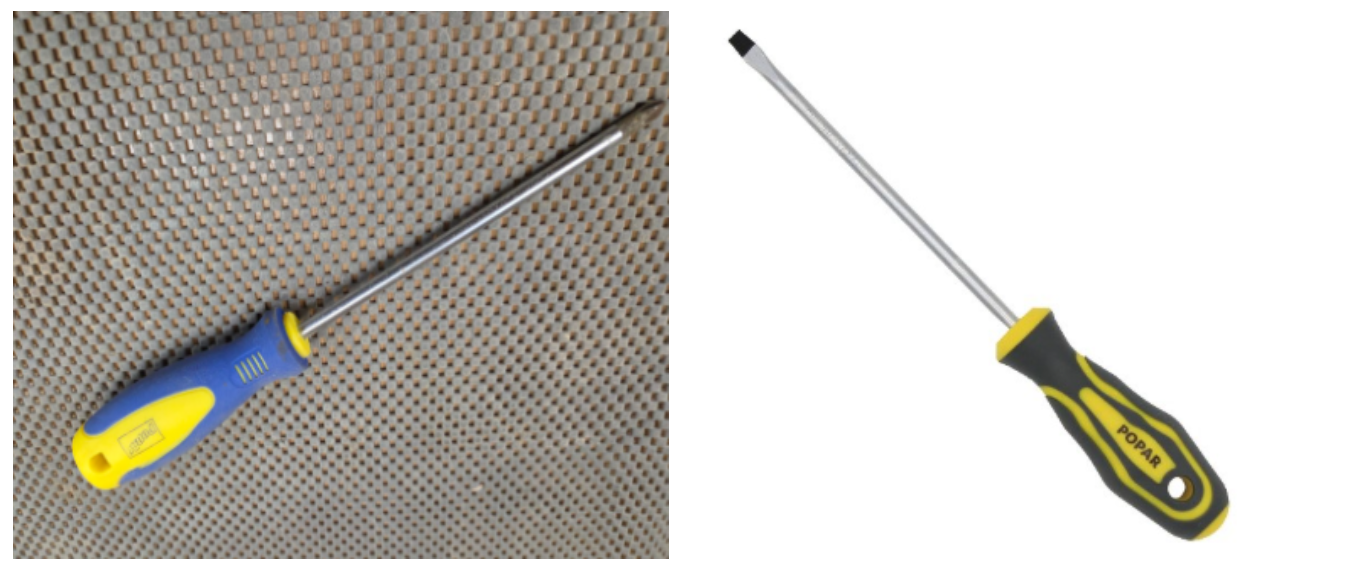
Comparing the original and modern POPAR screwdriver offers an interesting insight into product development over a period much shorter than the entire history of the screwdriver, but one that is tangible and meaningful to users.
The image on the left shows the POPAR screwdriver as it was designed twenty years ago. Despite its age, it still serves its intended purpose today. The photograph on the right shows the current POPAR screwdriver.
When comparing the two, it is worth looking particularly at the handle's shape, size and profile, its grip surface, the transition between the handle and shaft, and the appearance and design of the tip. These details influence how the tool feels in use and how effectively the user can control it in different working positions.
POPAR and LMM Profesional: Development through hands-on experience with tools
This development forms part of the broader story of hand tools. The POPAR hand tool range adapts to users' needs, design solutions evolve, and product presentation improves. At the same time, precision, ergonomics and suitability for the intended application are becoming increasingly important when selecting a tool.
The older POPAR screwdriver, which is still in use, therefore has particular value. Its age alone does not allow us to draw conclusions about all its technical properties or to make a direct technical comparison with today's model. However, it demonstrates something very tangible: hand tools often remain part of a workshop for many years, sometimes even decades. Their usefulness is measured not only by their appearance, but above all by how reliably they perform their intended task.
“From old to new, the appearance may change. The fundamental criteria, however, remain the quality and usefulness of the tool in everyday work.”
What actually determines the quality of a screwdriver?
A good screwdriver is more than a piece of metal with a shaped tip. Its performance depends on the choice of material, manufacturing methods, heat treatment, geometric precision and assembly quality. All its components must work together as a complete tool.
Material: balancing hardness and toughness
The shaft and tip of a screwdriver are generally made of steel, but the word “steel” alone tells us very little about the quality of a product. The material's composition, the processing methods used and its final mechanical properties are all important.
For the tip, two key properties are wear resistance and the ability to retain its correct shape. If the material is too soft, the tip may wear down or deform more quickly under load. If the material is improperly heat-treated and becomes too brittle, the risk of damage or breakage increases.
The objective is therefore generally to achieve an appropriate balance between hardness and toughness. Hardness describes a material's resistance to localised plastic deformation, while toughness describes its ability to withstand stress without suddenly failing. These are not the same property, and one does not automatically guarantee the other.
When choosing a screwdriver, it is therefore more important to establish whether the finished product is suitable for its intended application and has been properly tested than simply to rely on a manufacturer's description referring to “hardened steel”.
Heat treatment: Properties that cannot be judged by appearance alone
Heat treatment is a process that deliberately changes the microstructure of steel to achieve the required properties. For tools, this may include hardening and tempering, with the correct choice of process and control of its parameters being essential.
ISO 8764-1, which applies to screwdriver tips for cross-head drive profiles, specifies geometric and technical requirements and includes hardness and testing requirements. This demonstrates that tip quality is not simply a matter of visual finish: material properties and behaviour under load must also be assessed. Source: ISO 8764-1 – screwdriver tips for cross-head drive profiles.
In practice, the tip must not sustain damage under its intended operating load that would render it unusable. Testing therefore examines hardness, dimensions and resistance to mechanical stress. The specific required values depend on the type of tool and the applicable standard.
Tip geometry: A small difference with a major impact
The tip must be manufactured to fit the screw head correctly. Even a minor deviation from the specified shape or dimensions can reduce contact between the tip and the drive recess, increase the risk of slipping and damage either the tip or the screw head.
For this reason, screwdriver standards specify tip geometry and dimensions and, for certain designs, also define testing procedures. ISO 2380-1, for example, covers screwdriver tips for slotted screws, including their shape, dimensions, technical requirements and testing of the connection between the shaft and handle in hand-operated screwdrivers. Source: ISO 2380-1 – screwdrivers for slotted screws.
The shaft and Its connection to the handle
The screwdriver shaft transfers torque from the handle to the tip. It must withstand the loads generated during screwdriving without permanently deforming or breaking.
The connection between the shaft and handle is equally important. If the joint is poorly designed or manufactured, the shaft may rotate inside the handle, begin to move or come loose. Such a defect affects not only comfort but also the user's control over the tool.
ISO 2380-1 explicitly includes a torque test requirement for the connection between the blade or shaft and the handle of hand-operated screwdrivers. This is a concrete example of how standardisation covers more than the shape of the tip alone.
The handle
The handle is the part of the screwdriver held during use, so it has a significant influence on how comfortably and efficiently the tool can be operated. Its shape, size and surface determine how securely it can be gripped, how much force can be transferred to the screw and how reliably the tool can be controlled.
There is no single handle design that is best for every task. Precision screwdriving requires good control over rotation, while higher-torque applications call for a handle that allows greater force to be applied while maintaining a stable grip.
Modern handles are often made from synthetic materials and sometimes combine several different materials. This allows their shape, surface and feel to be tailored to the intended application. However, using multiple materials or an unusual shape does not necessarily make a handle better. What matters most is that it fits comfortably in the hand, does not slip during use and allows the user to maintain reliable control over the tool.
Ergonomics is therefore not merely a question of appearance, but primarily of how well the tool fits the user and the task being performed.
Read more about hand tool ergonomics in our blog post Hand tool ergonomics.
Surface protection and finishing
The surface treatment of a screwdriver helps protect the metal against rust and other environmental influences while also affecting the tool's appearance. The appropriate type of protection depends on the material used and the conditions in which the screwdriver will be operated.
However, a protective coating does not automatically mean that a screwdriver is of high quality. It does not guarantee that the tip is sufficiently hard to resist wear or deformation during screwdriving. Likewise, an attractive finish does not reveal how well the steel has been processed or how securely the shaft is attached to the handle.
Screwdriver quality therefore depends on several factors: the choice of materials, manufacturing precision, appropriate metal treatment and a reliable connection between the individual components. Only when all these elements work together can the tool perform its task effectively and reliably.
Standards: How Is screwdriver quality defined and verified?
Standards establish common technical criteria that can be used to describe and verify specific product properties. For screwdrivers, the most relevant standards cover tip dimensions and geometry, requirements for hand tools, and specific safety requirements for insulated screwdrivers.
ISO 2380: Screwdrivers for slotted screws
ISO 2380 applies to screwdrivers for slotted screws. It specifies tip shapes and dimensions, technical requirements and testing conditions. For hand-operated screwdrivers, it also includes torque testing of the connection between the shaft and handle.
The standard also addresses general requirements, shaft lengths and the marking of hand-operated screwdrivers.
ISO 8764: Screwdrivers for cross-head screws
ISO 8764 covers screwdriver tips for cross-head screws. It specifies geometric and technical requirements for the relevant tips and methods for verifying their conformity.
IEC 60900: Specific requirements for insulated tools
Insulated screwdrivers designed for electrical work belong to a specialised category of hand tools. For VDE tools — the term commonly used for insulated tools for electrical work — it is not enough for the handle to be made of an electrically non-conductive material or simply to carry a voltage marking.
The international standard IEC 60900:2018 applies to insulated, insulating and hybrid hand tools intended for work on or near live parts at rated voltages of up to 1,000 V AC and 1,500 V DC. The standard specifies requirements for these tools, but compliance does not replace user training or safe working procedures. Source: IEC 60900:2018 – hand tools for work up to 1,000 V AC and 1,500 V DC.
Standards and legislation in screwdriver manufacturing
A standard does not automatically guarantee that every product on the market is of high quality. Similarly, a product should not be described as compliant with a particular standard without the appropriate documentation. The value of a standard lies in establishing verifiable criteria that can be applied during product design, manufacturing and testing.
When purchasing a screwdriver, it is therefore advisable to check the type of work for which it is intended, whether it carries the required markings, and whether the manufacturer or supplier can provide the relevant technical information. This is particularly important for insulated tools, given their direct connection to user safety.
It is also necessary to distinguish between standards and legislation. While an international standard describes technical requirements and verification methods, legislation establishes the legal obligations that must be met when products are placed on the market.
For consumer products, the European framework for general product safety, established by Regulation (EU) 2023/988, is also important. The regulation has applied since 13 December 2024. The specific obligations depend on the type of product, its intended use and the role of the economic operator in the supply chain.
For insulated screwdrivers, specific technical requirements for electrical tools, including IEC 60900, must also be taken into account alongside general requirements. When verifying conformity, it is therefore important to assess the specific product and its documentation rather than relying solely on its appearance or an individual marking on the handle. Source: European Commission – CE marking and Regulation (EU) 2023/988 on general product safety.
Key takeaways:
- The earliest documented screwdrivers date back to the late Middle Ages. Their development is closely linked to advances in screw manufacturing and precision machinery.
- Screwdriver quality cannot be assessed by appearance alone. Material selection, heat treatment, tip geometry, the handle connection and verified performance are all important.
- ISO 2380 and ISO 8764 specify technical requirements for the relevant types of screwdrivers and tips.
- Insulated electrical tools, also known as VDE tools, are subject to specific requirements, including IEC 60900.
- The history of POPAR hand tools is part of the development of LMM Profesional, from the launch of its own brand in 2006 to today's hand tool range.
Frequently asked questions
1. When did the first screwdrivers appear?
The earliest documented examples date back to the late Middle Ages, approximately 1475–1490. Early screwdrivers were designed for slotted screws, although their exact place of invention cannot be reliably established.
2. What has the greatest influence on screwdriver quality?
The key factors are the material and heat treatment of the shaft and tip, geometric precision, the quality of the connection between the shaft and handle, and the tool's suitability for its intended application. For certain types of screwdrivers, quality is also verified through standardised tests.
3. Is every screwdriver with an insulated handle suitable for electrical work?
No. An insulated-looking handle alone does not prove that a tool meets the requirements for working on live electrical parts. Such applications require appropriate tools that meet relevant requirements, such as IEC 60900. They must also be used in accordance with the instructions and safe working procedures.