Masonry tools: development, materials, and use
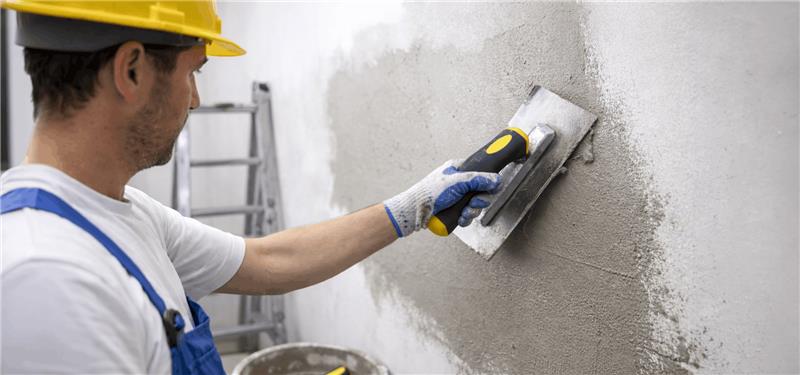
Masonry, as one of the fundamental construction trades, has accompanied the development of civilization since prehistory. The first permanent structures made of stone, sun-dried bricks, and lime mortars—dating back to the Neolithic Revolution—represented not only an architectural advancement but also the beginning of the systematic development of hand tools. Over the centuries, these tools evolved in close connection with materials, construction technologies, and the ergonomic needs of workers. Despite the high level of specialization in modern equipment, the basic principles remain unchanged: collecting, applying, distributing, and finishing material.
In modern terminology, masonry tools can be divided into two basic functional groups: tools for transporting and dosing material, and tools for processing and finishing surfaces. Among the most basic and indispensable are the mortar scoop, the masonry trowel, and various types of floats.
Mortar scoop
The mortar scoop is an elementary tool for handling mortar or concrete mixtures. Its primary function is to transfer material from a container (bucket or trough) to the working surface or directly onto the masonry trowel.
Despite its apparent simplicity, it is a tool whose shape and material significantly influence work efficiency. Traditionally, scoops were made of wood or metal, but today metal and high-quality plastic versions prevail.
Metal versions, such as the POPAR masonry scoop, provide high mechanical resistance, long service life, and easy cleaning—crucial when working with lime-cement mortars.
Plastic or stainless versions are particularly suitable for working with aggressive or chemically demanding materials, as they offer better corrosion resistance and lower weight.
The handle is also an important element—wooden handles provide a good grip and reduce vibration transfer, while modern PVC handles offer better moisture resistance and easier maintenance.
Masonry trowel
Another key masonry tool is the masonry trowel, also known as a plastering trowel. It is one of the most important tools for applying and shaping mortar. Its characteristic shape—a metal plate with a slightly pointed or rounded edge—allows precise dosing and distribution of material.
Historical sources, including archaeological finds from Pompeii, confirm the use of similar tools during the Roman Empire, demonstrating the exceptional functional design that has been preserved to this day.
Modern masonry trowels are mostly made of hardened or stainless steel, providing an optimal balance between elasticity and strength. The elasticity of the steel is crucial, as it allows slight flexibility during application, reducing user fatigue and improving control.
Different sizes and shapes are available, adapted to specific tasks—from rough masonry work to fine plastering, as well as shaping internal corners and external edges.
Masonry float
Masonry floats are essential for achieving the final surface quality. Their primary function is to level and smooth freshly applied material, with both the material and geometry of the tool playing an important role. The development of floats—from simple wooden boards to modern steel or composite versions—is closely linked to the evolution of plastering and finishing techniques. Today, several types of floats are specialized for different stages of work.
Straight float
Straight floats are a universal tool for leveling and finishing. Their completely flat surface allows even material distribution, which is essential for an aesthetically and technically proper finish. Larger sizes enable faster work on bigger surfaces, while smaller floats provide greater precision for details and edges. Professionals often prefer stainless steel due to its corrosion resistance and durability, while plastic floats are mainly used in decorative techniques.
Notched float
Notched floats are specialized tools that play a key role in applying adhesives, especially when laying ceramic tiles and stone. Their functionality is based on shaped teeth that enable controlled and uniform material application.
The size of the teeth directly affects the thickness of the application and, consequently, adhesion. For example, floats with 6 × 6 mm teeth are suitable for smaller tiles, while larger formats require 10 × 10 mm teeth or more.
An important professional aspect is the angle of application—proper use involves holding the float at approximately a 45° angle, ensuring optimal adhesive distribution and reducing the risk of air pockets.
In addition to basic types, there are also specialized floats with attached foam, mesh foam, or rubber. These are mainly used for grouting and decorative surface finishing, allowing precise work in the final stages where detail and visual quality are crucial.
The development of masonry tools is therefore not only a story of technological progress, but also of adaptation to the needs of users and materials. Today’s tools combine traditionally proven shapes with advanced materials, enabling higher productivity, better ergonomics, and higher quality workmanship. For professionals, this means greater efficiency and reduced physical strain, while for home users it ensures simpler and more reliable work.
Sources:
- Adam, J.-P. (1994). Roman Building: Materials and Techniques. Indiana University Press.
- Lancaster, L. (2005). Concrete Vaulted Construction in Imperial Rome. Cambridge University Press.
- Encyclopaedia Britannica – Masonry (https://www.britannica.com/technology/masonry)
- Ching, F. D. K. (2014). Building Construction Illustrated. Wiley