Tool and drill bit shank systems
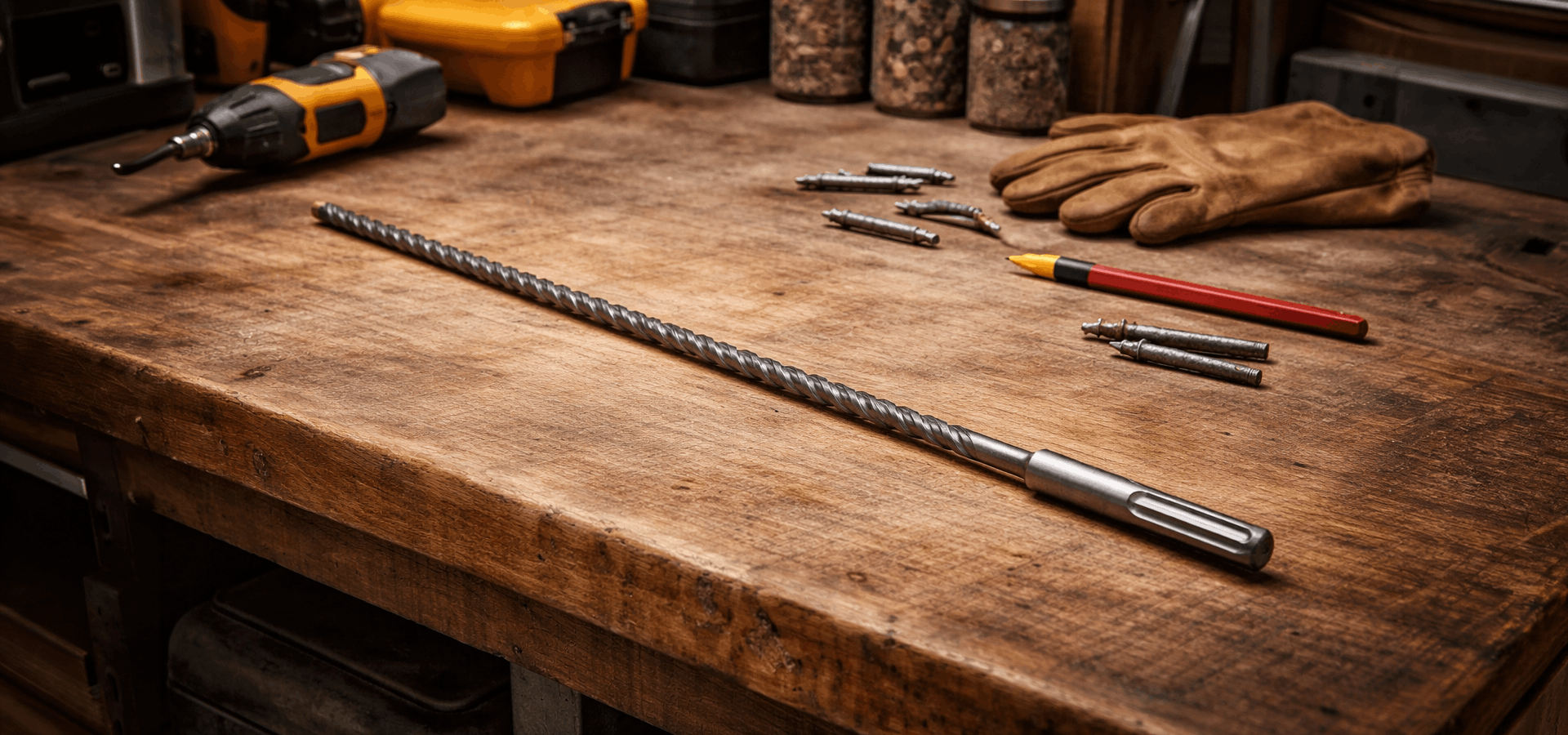
In modern material processing—whether in construction, the metal industry, or everyday installation tasks—we often focus on selecting the right drill bit or accessory, while much less attention is given to the shank system.
However, the shank represents a critical interface between the machine and the tool, where all mechanical loads are transferred—from torque to impact impulses. Its design directly affects work efficiency, tool wear, and machining precision.
Development and types of shank systems
Cylindrical shank
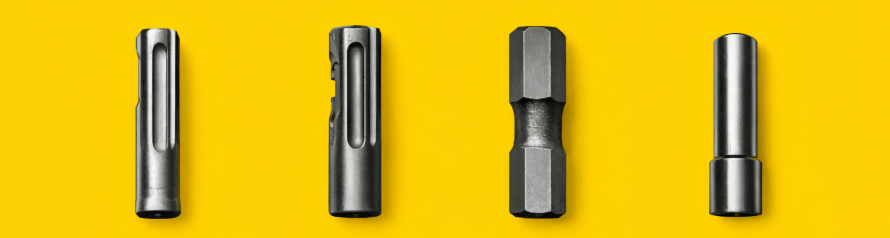
Historically, the earliest shank systems were simple, based on a cylindrical shaft clamped into a standard drill chuck through friction. This system, now known as the cylindrical shank, remains widely used due to its versatility.
It is commonly found in drill bits for metal, wood, and various hole saws. Its main advantage lies in compatibility, as it can be used with virtually all drills. However, it also has a significant limitation: under higher torque or impact loads, slippage can occur within the chuck, reducing efficiency and causing additional tool wear.
SDS shank system
This limitation led to the development of more advanced shank systems. In the 1970s, the Bosch introduced the SDS system, short for Slotted Drive System (also known in German as Steck-Dreh-Sitz).
This represented a revolutionary approach where power transmission no longer relied on friction, but on a mechanical locking mechanism. The drill bit features specially designed grooves that engage with locking elements in the tool, enabling direct transmission of torque and, more importantly, impact energy.
SDS Plus vpetje
The most widely used version of this system is SDS Plus, which has become the standard in light to medium-duty rotary hammers.
Its design, featuring two open and two closed grooves, provides an optimal balance between stability and quick tool changes. In practice, SDS Plus is used for drilling into concrete, brick, and similar materials where a combination of rotation and impact is required.
SDS Max
For more demanding applications with significantly higher loads, the SDS Max system was developed. It uses a thicker shank and a larger contact surface, allowing the transfer of much greater forces.
These systems are typically found in professional demolition hammers and heavy construction equipment. The key difference between SDS Plus and SDS Max is not only in size but in purpose: the former is optimized for drilling, while the latter is designed for maximum impact energy transfer.
Hex shank
In addition to SDS systems, the hexagonal (hex) shank is also widely used in modern applications. Standardized at 1/4 inch (6.35 mm), it has become synonymous with screwdriver bits.
Its advantage lies in direct torque transmission without slippage, as the flat surfaces ensure a secure grip within the chuck mechanism. Hex shanks are indispensable in cordless screwdrivers, where quick bit changes are essential.
Threaded shank
A special category is the threaded shank, primarily used in hole saws and specialized cutting tools. The most common is the M14 thread, which is standard for angle grinders and diamond core bits. This system ensures an extremely stable connection, resistant to high loads and vibrations.
Today, the development of shank systems follows three main directions: improved energy transfer efficiency, faster tool changes, and greater compatibility between systems.
SDS remains the dominant standard in construction, while hex shanks dominate in assembly and fastening applications. Despite its limitations, the cylindrical shank remains indispensable due to its universal compatibility.
Although often perceived as a secondary component, the shank system is, in reality, the foundation of the entire tool setup. The correct choice ensures better energy transfer, reduced wear, and increased safety.
In professional environments, there is no room for compromise—any inefficiency quickly results in poorer performance or higher costs.