Mixers: development, types, and the right choice for optimal mixing
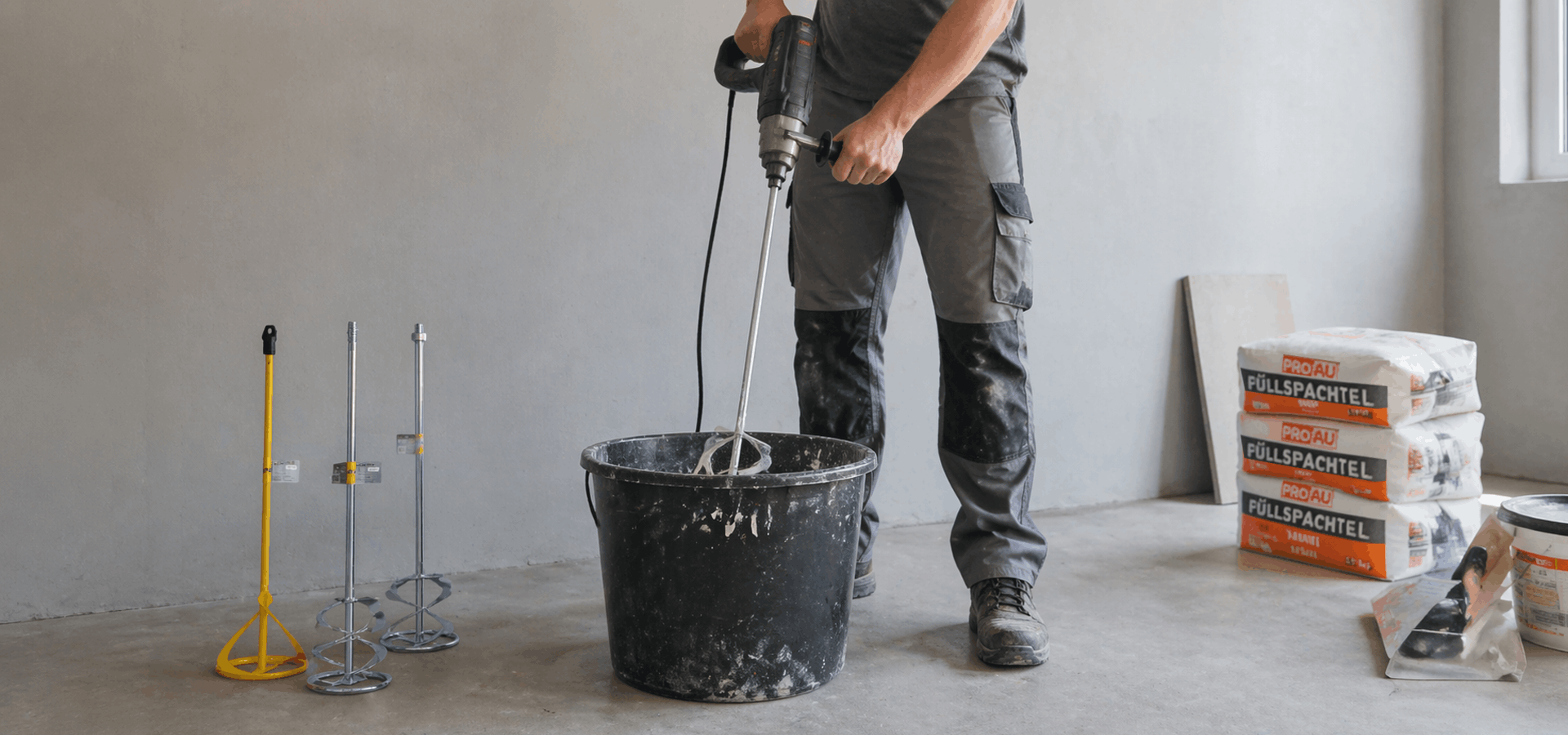
Mixing materials is one of the oldest technical operations in construction, craftsmanship, and industry. As early as ancient times, simple hand tools—wooden sticks and paddles—were used to prepare mortars, paints, and adhesives. With the rise of industry in the 19th century, the first mechanical mixers appeared, enabling more uniform and faster mixing.
A real breakthrough came with the use of electric drills in the 20th century. These made it possible to use various attachments, including mixing paddles, which are now indispensable tools for both professionals and DIY users. Modern mixers are the result of precise development—from spiral design to material selection—all aimed at achieving the most uniform mixture possible.
How does mixing actually work?
To understand why so many different mixers exist, we first need to understand the basic physical processes involved in mixing. Three key concepts appear here:
Convection
Convection refers to the movement of larger quantities of material as a whole. This is what we actually see—when the mass in the bucket rotates, rises, and falls. Simply put: the mixer “moves the mass around.”
Diffusion
Diffusion is a more subtle process that occurs at the particle level. It ensures that individual particles are evenly distributed. Although invisible, it is crucial for achieving a completely uniform mixture—without streaks or lumps.
Axial flow
Axial flow means the movement of material along the axis of the mixer—up and down. Imagine a bucket of paint: the material moves from the bottom to the top or vice versa. This ensures that all layers are mixed, not just the surface.
Types of mixers based on shape and operation
The shape of the mixer is one of the most important factors affecting mixing efficiency. At first glance, the differences may seem small, but the geometry of the spiral determines how the material moves in the container and how quickly a uniform mixture is achieved.
The most commonly used are so-called helical mixers. The term “helical” means the mixer has a spiral shape, similar to a screw or drill bit. This design allows controlled movement of material in a specific direction, which is essential for quality mixing.
With spiral mixers, the direction of the spiral is crucial:
- A left-hand downward-pushing spiral pushes the material toward the bottom of the container during rotation. The mass moves downward from the top and then rises along the edges back to the surface. This creates efficient circulation without excessive air intake. These mixers are ideal for thicker materials such as adhesives, mortars, and leveling compounds, where a compact, homogeneous structure without air bubbles is desired.
- A right-hand upward-pulling spiral pulls material toward the surface. The mass rises from the bottom and then returns toward the center. This method is faster and suitable for thinner materials like paints and varnishes. However, at higher speeds, it can introduce air into the mixture.
In addition to spiral mixers, there are also basket mixers, which have a more open design. These create less intense movement and therefore less turbulence. Turbulence refers to chaotic, swirling motion in a fluid. Excessive turbulence can introduce air into the mixture, which is undesirable for certain materials, especially paints. Basket mixers are therefore suitable for more sensitive materials where controlled mixing is important.
For more demanding applications, disc or turbine mixers are used. These generate higher shear forces, meaning they can break down very fine particles or lumps. Such mixers are mainly used in industry, where a high level of homogeneity is required.
The shape of the mixer directly determines how the material moves. When the shape is correctly matched to the material properties, the mixing process becomes significantly faster and the result more uniform and high-quality. If the choice is wrong, even the most powerful tool cannot compensate for unsuitable mixer geometry.
Mixer materials and their impact on work
When choosing a mixer, the shape is often the first thing we notice, but the material it is made from plays a major role in usability and durability.
Most mixers are made from various types of steel, often treated to resist wear and corrosion.
- Galvanized steel is a standard choice, offering a good balance between cost and durability. The zinc coating protects against rust, making these mixers suitable for paints, adhesives, and most construction mixtures where chemical aggressiveness is low.
- For more demanding materials, such as epoxy resins or chemically active adhesives, stainless steel (INOX) is preferred. Its key advantage is high resistance to chemical reactions, meaning it won’t degrade or affect the composition of the mixture.
A related concept is viscosity, which describes how “thick” a liquid is or how resistant it is to flow. The higher the viscosity, the more resistance the mixer encounters. This requires a mechanically stronger mixer and a tool with sufficient power.
Attachment method and power transmission
An important but often overlooked factor is how the mixer is attached to the tool. This directly affects power transfer and stability during operation.
- For lighter tasks, a hex (HEX) shank is commonly used. It allows quick changes and is compatible with most standard drills and screwdrivers. It is suitable for smaller quantities and less viscous materials.
- For more demanding tasks, an M14 thread is used, which is considered an industry standard. This connection is much more stable and allows better torque transfer without slipping.
This leads to the concept of torque, which refers to rotational force. Simply put: the higher the torque, the easier it is for the tool to overcome the resistance of thick materials. Using a small screwdriver to mix dense adhesive will quickly result in stalling or overheating—due to insufficient torque.
Choosing a mixer based on quantity and purpose
Selecting the right mixer is not just about spiral type but also size.
- The diameter determines how much material can be effectively moved. Smaller diameters are suitable for small volumes (e.g., up to 10 liters of paint), while larger volumes require larger mixers to maintain efficiency.
- The length is also important. Short mixers are suitable for shallow containers, but for larger buckets, they force the user into an uncomfortable posture. Longer mixers allow a more upright stance and better control.
This is not just about comfort—it also affects safety and precision. A stable posture enables more controlled mixing, which directly impacts the quality of the mixture.
What happens with improper mixing?
Incorrect mixer choice or poor technique can significantly worsen the result.
- One common issue is air inclusion, caused by excessive speed or an unsuitable mixer. Air bubbles are particularly problematic in paints, as they can appear as surface defects after application. In adhesives, they can reduce bonding strength.
- Another issue is uneven mixing, caused by insufficient diffusion. This can leave lumps or areas with different compositions, affecting mechanical properties.
- Excessive mixing intensity can lead to over-turbulence, creating chaotic motion that often worsens the result instead of improving it.
Recommendations for optimal use
- Start at lower speeds and gradually increase them.
- Keep the mixer submerged in the material to avoid air intake.
- Slightly tilt the mixer during operation to improve circulation and combine axial and radial flow.
- Clean the mixer thoroughly after use to prevent contamination in future applications.
Mixing paddles for drills and screwdrivers may seem like simple tools, but their design is based on complex physical principles. Understanding concepts such as convection, diffusion, axial flow, and viscosity allows for more informed selection and use.
The right mixer not only speeds up work but also ensures a significantly better final result. A well-mixed, air-free, lump-free mass is essential for high-quality coatings, strong adhesive bonds, and reliable construction materials.
In practice, this means that choosing the right mixer is not just a technical detail—it is a crucial step in the entire workflow, one that separates average results from outstanding ones.
Mixing materials is one of the oldest technical operations in construction, craftsmanship, and industry. As early as ancient times, simple hand tools—wooden sticks and paddles—were used to prepare mortars, paints, and adhesives. With the rise of industry in the 19th century, the first mechanical mixers appeared, enabling more uniform and faster mixing.
A real breakthrough came with the use of electric drills in the 20th century. These made it possible to use various attachments, including mixing paddles, which are now indispensable tools for both professionals and DIY users. Modern mixers are the result of precise development—from spiral design to material selection—all aimed at achieving the most uniform mixture possible.
How does mixing actually work?
To understand why so many different mixers exist, we first need to understand the basic physical processes involved in mixing. Three key concepts appear here:
Convection
Convection refers to the movement of larger quantities of material as a whole. This is what we actually see—when the mass in the bucket rotates, rises, and falls. Simply put: the mixer “moves the mass around.”
Diffusion
Diffusion is a more subtle process that occurs at the particle level. It ensures that individual particles are evenly distributed. Although invisible, it is crucial for achieving a completely uniform mixture—without streaks or lumps.
Axial flow
Axial flow means the movement of material along the axis of the mixer—up and down. Imagine a bucket of paint: the material moves from the bottom to the top or vice versa. This ensures that all layers are mixed, not just the surface.
Types of mixers based on shape and operation
The shape of the mixer is one of the most important factors affecting mixing efficiency. At first glance, the differences may seem small, but the geometry of the spiral determines how the material moves in the container and how quickly a uniform mixture is achieved.
The most commonly used are so-called helical mixers. The term “helical” means the mixer has a spiral shape, similar to a screw or drill bit. This design allows controlled movement of material in a specific direction, which is essential for quality mixing.
With spiral mixers, the direction of the spiral is crucial:
- A left-hand downward-pushing spiral pushes the material toward the bottom of the container during rotation. The mass moves downward from the top and then rises along the edges back to the surface. This creates efficient circulation without excessive air intake. These mixers are ideal for thicker materials such as adhesives, mortars, and leveling compounds, where a compact, homogeneous structure without air bubbles is desired.
- A right-hand upward-pulling spiral pulls material toward the surface. The mass rises from the bottom and then returns toward the center. This method is faster and suitable for thinner materials like paints and varnishes. However, at higher speeds, it can introduce air into the mixture.
In addition to spiral mixers, there are also basket mixers, which have a more open design. These create less intense movement and therefore less turbulence. Turbulence refers to chaotic, swirling motion in a fluid. Excessive turbulence can introduce air into the mixture, which is undesirable for certain materials, especially paints. Basket mixers are therefore suitable for more sensitive materials where controlled mixing is important.
For more demanding applications, disc or turbine mixers are used. These generate higher shear forces, meaning they can break down very fine particles or lumps. Such mixers are mainly used in industry, where a high level of homogeneity is required.
The shape of the mixer directly determines how the material moves. When the shape is correctly matched to the material properties, the mixing process becomes significantly faster and the result more uniform and high-quality. If the choice is wrong, even the most powerful tool cannot compensate for unsuitable mixer geometry.
Mixer materials and their impact on work
When choosing a mixer, the shape is often the first thing we notice, but the material it is made from plays a major role in usability and durability.
Most mixers are made from various types of steel, often treated to resist wear and corrosion.
- Galvanized steel is a standard choice, offering a good balance between cost and durability. The zinc coating protects against rust, making these mixers suitable for paints, adhesives, and most construction mixtures where chemical aggressiveness is low.
- For more demanding materials, such as epoxy resins or chemically active adhesives, stainless steel (INOX) is preferred. Its key advantage is high resistance to chemical reactions, meaning it won’t degrade or affect the composition of the mixture.
A related concept is viscosity, which describes how “thick” a liquid is or how resistant it is to flow. The higher the viscosity, the more resistance the mixer encounters. This requires a mechanically stronger mixer and a tool with sufficient power.
Attachment method and power transmission
An important but often overlooked factor is how the mixer is attached to the tool. This directly affects power transfer and stability during operation.
- For lighter tasks, a hex (HEX) shank is commonly used. It allows quick changes and is compatible with most standard drills and screwdrivers. It is suitable for smaller quantities and less viscous materials.
- For more demanding tasks, an M14 thread is used, which is considered an industry standard. This connection is much more stable and allows better torque transfer without slipping.
This leads to the concept of torque, which refers to rotational force. Simply put: the higher the torque, the easier it is for the tool to overcome the resistance of thick materials. Using a small screwdriver to mix dense adhesive will quickly result in stalling or overheating—due to insufficient torque.
Choosing a mixer based on quantity and purpose
Selecting the right mixer is not just about spiral type but also size.
- The diameter determines how much material can be effectively moved. Smaller diameters are suitable for small volumes (e.g., up to 10 liters of paint), while larger volumes require larger mixers to maintain efficiency.
- The length is also important. Short mixers are suitable for shallow containers, but for larger buckets, they force the user into an uncomfortable posture. Longer mixers allow a more upright stance and better control.
This is not just about comfort—it also affects safety and precision. A stable posture enables more controlled mixing, which directly impacts the quality of the mixture.
What happens with improper mixing?
Incorrect mixer choice or poor technique can significantly worsen the result.
- One common issue is air inclusion, caused by excessive speed or an unsuitable mixer. Air bubbles are particularly problematic in paints, as they can appear as surface defects after application. In adhesives, they can reduce bonding strength.
- Another issue is uneven mixing, caused by insufficient diffusion. This can leave lumps or areas with different compositions, affecting mechanical properties.
- Excessive mixing intensity can lead to over-turbulence, creating chaotic motion that often worsens the result instead of improving it.
Recommendations for optimal use
- Start at lower speeds and gradually increase them.
- Keep the mixer submerged in the material to avoid air intake.
- Slightly tilt the mixer during operation to improve circulation and combine axial and radial flow.
- Clean the mixer thoroughly after use to prevent contamination in future applications.
Mixing paddles for drills and screwdrivers may seem like simple tools, but their design is based on complex physical principles. Understanding concepts such as convection, diffusion, axial flow, and viscosity allows for more informed selection and use.
The right mixer not only speeds up work but also ensures a significantly better final result. A well-mixed, air-free, lump-free mass is essential for high-quality coatings, strong adhesive bonds, and reliable construction materials.
In practice, this means that choosing the right mixer is not just a technical detail—it is a crucial step in the entire workflow, one that separates average results from outstanding ones.