Staplers and Tackers – Professional review of models, mechanisms, staples, and proper Use
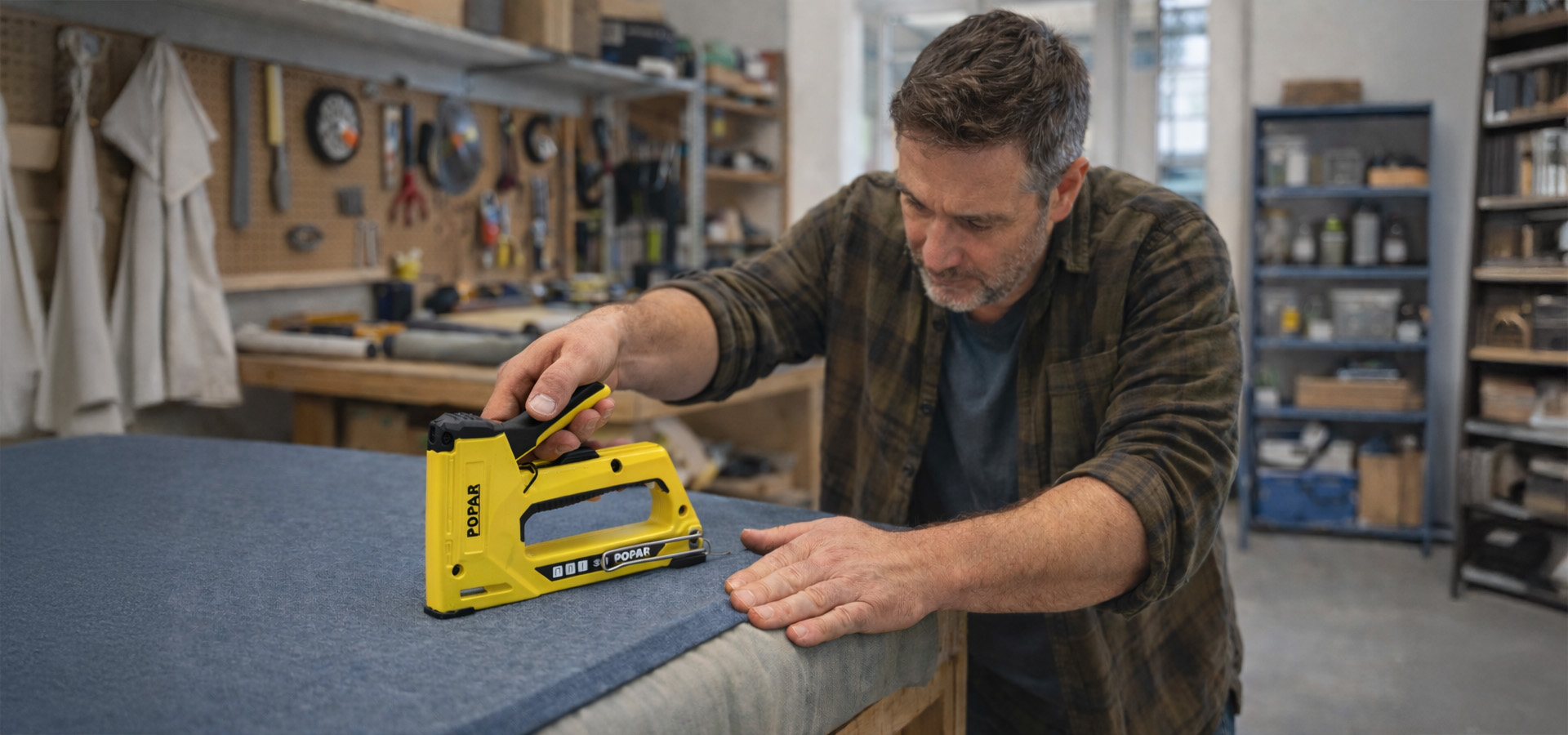
Staplers are essential tools in construction, carpentry, upholstery, electrical installations, and craft projects. Hand-held and impact staplers provide a reliable, fast, and cost-effective way to secure materials like wood, textiles, films, insulation, and cables. This guide explores stapler types, operating mechanisms, staple varieties, and tips for using them safely and effectively.
Types of staplers
Hand staplers
Hand staplers use a mechanical lever and spring to drive staples into materials. Pressing the handle compresses the spring, and releasing it pushes the staple forward.
Key features:
- Fully mechanical, no electricity or air required
- Lightweight and portable
- Adjustable impact force
- Ideal for light to medium tasks
Common applications: upholstery, installing membranes, thin wooden panels, and decorative elements.
Impact staplers
Impact staplers work like a hammer. A strike triggers the mechanism, driving the staple using kinetic energy.
Key features:
- Fast operation over large surfaces
- Less precise than hand staplers
- Ideal for soft materials
Typical applications: roofing and construction membranes, insulation, temporary assemblies, and packaging tasks.
Operating mechanisms
Hand Staplers: Pressing the handle tensions a spring, which releases to drive a piston that pushes the staple into the material. Force can be adjusted based on material hardness and staple length.
Impact Staplers: The mechanism activates on contact with the material. The energy from the swing drives the staple, making precision dependent on the user’s strike.
Types of staples
Rectangular (Flat) Staples:
- Most commonly used
- Suitable for wood, textiles, and films
- Crown width distributes force evenly
- Applications: upholstery, decorative panels, films
U-Staples (for Cables):
- Semi-circular, gentle on cable insulation
- Provides stable fixation
- Applications: electrical installations
T-Staples (Headless Nails):
- Narrow, low-visibility
- Penetrates deeply
- Applications: fine woodworking, thin strips, decorative elements
Choosing staple depth and force
- Soft materials: shorter staples (6–10 mm), lower force
- Medium-hard materials: medium staples (10–14 mm), moderate force
- Hard materials: longer staples (14–16 mm+), higher force
Tip: The staple should penetrate at least two-thirds of its length into the material.
Safety tips
- Always wear protective eyewear
- Never point the stapler at yourself or others
- Empty the magazine before changing staples
- Check for electrical wires beneath the material
- Use the correct staple length and force for each task
Impact staplers require extra caution due to their higher kinetic energy.
Matching staples to applications
Different staples are suited for different tasks:
- Upholstery, decorative panels: flat staples
- Cable fastening: U-staples
- Thin wood strips, fine woodworking: T-staples
- Films, insulation, temporary assemblies: flat staples with appropriate length and force
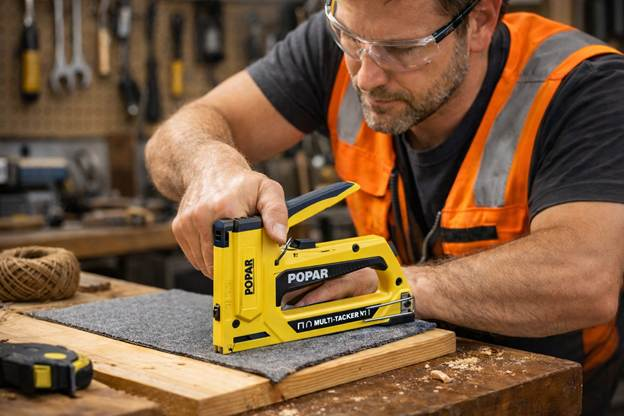
Why choose POPAR staplers?
POPAR offers professional-grade hand-held and impact staplers with:
- Ergonomic design for comfort
- Durable construction for long life
- Precise firing mechanisms
- Compatibility with standard T, U, and flat staples
- Reliable performance even under heavy use
These staplers are ideal for professionals in construction, carpentry, electrical work, insulation, and upholstery.